


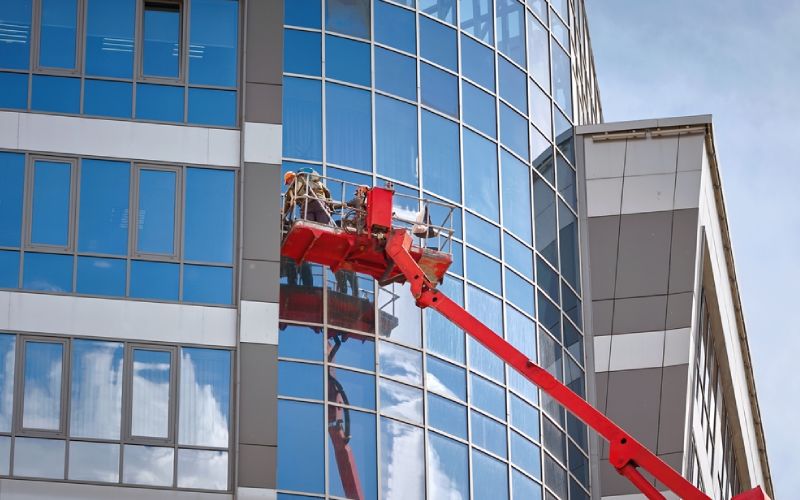
Winter Winds and Fog : Smart Manlift Planning for High-Rise Facade Work in Dubai’s Peak Maintenance Season
Dubai’s winters may seem gentle on paper, but for facade crews working 200 meters up, they carry their own kind of intensity. The cold settles into the metal of the platforms, fog creeps between towers before sunrise, and sudden gusts push against baskets and harness lines. In those conditions, high-rise work turns into a slow, deliberate negotiation between focus, equipment, and whatever the sky decides to do next.
The season from November to February has become the city’s preferred window for façade washing, inspections, repairs, and upgrade projects. The heat isn’t pounding through gloves, and operators can stay sharp without fighting dehydration. Still, winter has its curveballs. One heavy fog bank can hold teams on the ground until mid-morning. A quick surge of wind can force a stop halfway down a façade. And with more than 148 towers rising past 150 meters, even a short weather delay ripples across schedules fast.
All of this puts extra pressure on securing reliable access manlifts, boom lifts, spider lifts at the exact moment the weather gives you a small opening especially for teams coordinating with manlift rental dubai providers. Up there, timing isn’t just helpful; it’s survival.
Understanding Dubai’s Winter Microclimate: A Hidden Risk Factor
Winter in the UAE is not “cold weather” , it is a seasonal shift driven by relative humidity, thermal inversion, and Gulf moisture. Two environmental factors drastically affect façade access:
1. Fog Density and Visibility
Between December and February, Dubai experiences up to 20 dense fog events per month, particularly before 9:00 AM. For operators, low visibility means:
- Delayed mobilization and transport of equipment
- Inability to execute precision positioning
- Increased collision hazards around building perimeters
Occupational safety regulations recommend suspending aerial lift operations when visibility drops below 150 meters, a threshold commonly breached during morning hours.
2. Seasonal Winds and Pressure Systems
Winter brings stronger northerly winds moving inland from the Gulf. At higher elevations:
- Wind speeds increase by 1.5× for every 50 meters of elevation, meaning a mild 12 km/h ground wind becomes a hazardous 25–30 km/h condition at 150 meters.
- Aerial lifts must cease operations above 12.5 m/s (45 km/h), per international safety standards.
This intersection of fog and wind makes façade access a planning challenge requiring predictive modelling, redundancies, and real-time monitoring not guesswork.
Why Winter Is Still the Peak Season for Façade Work
Despite these challenges, winter remains the most active maintenance season due to:
- Lower thermal stress on operators and equipment
- Reduced risk of heat-induced mechanical failures
- Better conditions for sealant curing and façade inspections
- Peak demand from property developers preparing buildings for Q1 occupancy cycles
This results in a surge in manlift demand; rental companies in Dubai report a 30–40% spike in bookings between November and January. Sudden weather stoppages create cascading effects in scheduling, making smart planning essential.
Smart Manlift Planning: The New Benchmark for High-Rise Work
As buildings grow taller and more geometrically complex, conventional scheduling and equipment allocation methodologies fall short. Smart planning integrates data, technology, risk forecasting, and operational agility.
1. Microclimate Forecast Integration
High-rise access companies now use:
- NOAA-derived predictive wind models
- Fog probability algorithms based on dew point and humidity trends
- Real-time IoT weather stations mounted on rooftops
These integrations allow planners to build hour-by-hour windows of safe operation rather than traditional “full-day booking” assumptions.
2. Equipment Matchmaking Based on Elevation and Geometry
Not all manlifts are equal. Winter conditions demand careful selection:
- Boom lifts with wind-speed sensors for mid-rise façades
- Spider lifts for narrow podiums or complex setbacks
- Truck-mounted lifts for rapid deployment during unpredictable weather windows
Buildings with convex façades or recessed angles require hybrid rope-access + lift access strategies, reducing downtime due to weather disruptions.
3. Load and Pressure Monitoring
Modern manlifts come equipped with:
- Tilt sensors
- Dynamic load indicators
- Auto-leveling outriggers
- Wind-speed cut-off systems
These digital safety mechanisms reduce operator error, which remains the leading cause of lift-related incidents globally responsible for over 25% of elevated-worksite accidents according to international HSE reports.
4. Fog-Aware Scheduling Models
Smart scheduling models reorganize work into:
- Afternoon-heavy operations, when fog has dissipated
- Split shifts to exploit small weather windows
- Rolling task clusters, where crews pivot between elevations depending on real-time conditions
This agile resourcing can improve operational efficiency by up to 18%, according to regional facility management analytics.
Case for Preventive Planning: Cost, Safety, and Performance
Without a smart planning framework, winter façade operations face:
- Cost overruns due to idle equipment
- Wasted man-days
- Heightened safety risks
- Missed completion deadlines during Dubai’s competitive real estate cycles
Conversely, companies adopting data-driven scheduling report:
- 25% fewer stoppages
- 40% reduction in idle machine time
- Higher safety compliance
- More accurate delivery timelines
In Dubai’s maturing high-rise maintenance market, operational predictability is as valuable as physical access equipment.
Dubai’s winter conditions once viewed as a hurdle have become an advantage for teams that know how to work with them. Companies that study wind shifts, track morning visibility, and understand how cool air behaves around high-rise structures can find safe, efficient windows that others miss. With the city building higher every year, that kind of awareness isn’t optional anymore.
Façade work today is less a routine task and more a blend of timing, strategy, and quick thinking. It feels a bit like playing chess against the weather: every move matters, and the conditions always get a say. The companies that plan smartly and adapt fast will keep moving. Those that stick to old habits risk being left quite literally lost in the fog.
