


Why Spider Cranes Are Ideal for Winter Indoor & Confined-Space Lifting in Dubai
Dubai’s construction and facilities management sectors face a paradox during winter: while outdoor productivity rises due to milder temperatures, indoor and confined-space lifting becomes more complex due to accelerated project timelines, high-value interiors, and restricted access environments. This article examines why spider cranes also known as mini crawler cranes have emerged as the preferred lifting solution for winter indoor and confined-space operations in Dubai, within construction equipment cranes Dubai, supported by operational data, safety analytics, and industry trends.
Seasonal Construction Dynamics In Dubai
Dubai’s winter season (November–March) accounts for over 60% of annual project execution activity, according to regional construction scheduling reports. Developers deliberately compress fit-out, façade, and MEP installation phases into this window to avoid summer heat constraints. As a result, indoor lifting operations particularly in malls, hotels, hospitals, and retrofit projects intensify.
Traditional truck-mounted or mobile cranes, designed for open environments, struggle under these conditions. Limited access points, finished flooring, low ceiling clearances, and live environments demand lifting equipment that prioritizes precision over brute force.
The Spatial Constraint Problem
Urban Dubai is increasingly vertical and dense. Retrofitting projects in Downtown Dubai, Business Bay, and DIFC often involve:
- Doorway widths below 1 meter
- Load-bearing floor limits under 5 kN/m²
- Zero tolerance for vibration or exhaust fumes
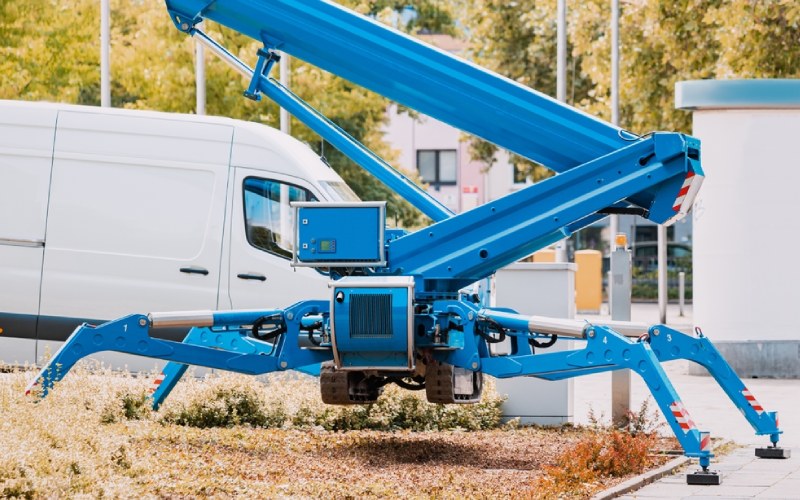
Spider cranes directly address these constraints. Most models can pass through standard doorways (600–900 mm), operate on electric power, and distribute ground pressure via multi-leg outriggers making them structurally compatible with finished interiors and sensitive substrates.
Winter Safety Analytics: Why Smaller Is Safer
Contrary to intuition, accident rates in confined lifting environments rise during winter. Faster schedules and overlapping trades increase risk density. Industry safety audits in the UAE indicate that confined-space lifting incidents account for nearly 28% of reported lifting near-misses, with root causes tied to poor maneuverability and over-scaled equipment.
Spider cranes mitigate these risks through:
- Computer-controlled load moment limiters
- Wireless remote operation, allowing operators optimal sightlines
- Automatic outrigger interlocks, preventing unstable lifts
Statistically, projects using mini cranes report up to 40% fewer lifting-related stoppages, improving both safety and schedule adherence.
Precision Engineering For High-Value Interiors
Dubai’s winter indoor projects are rarely utilitarian. They involve glass curtain walls, marble slabs, HVAC modules, and prefabricated steel elements installed within completed architectural shells.
Spider cranes offer millimeter-level control through proportional hydraulics and joystick systems. This precision reduces material damage rates particularly critical when installing glass, where replacement delays can cascade into weeks of downtime due to custom fabrication lead times. Industry case studies consistently show material damage reduction of 30–50% when spider cranes replace traditional lifting methods in interior environments.
Environmental Compliance And Indoor Air Quality
In Dubai, sustainability rules now directly affect how construction work is carried out. Requirements linked to LEED and Estidama mean contractors must control emissions, protect indoor air quality, and limit noise, particularly during interior lifting work.
Electric and hybrid spider cranes make this easier. They run without exhaust fumes and operate quietly, which allows lifting to continue inside buildings such as hospitals, retail centers, and offices without disturbing occupants or other work on site.
Logistics Efficiency In Winter Project Compression
Winter timelines compress logistics margins. Delays caused by road permits, escort requirements, or crane mobilization typical of crane hire dubai can derail entire work packages.
Spider cranes excel logistically:
- Transportable on light flatbeds or vans
- No police escort or road closure required
- Setup time averages 20–40 minutes, compared to hours for mobile cranes
Cost modeling indicates that spider cranes can reduce total lifting-related project costs by 35–55% when accounting for transport, crew size, and downtime.
Strategic Implications For Contractors
More contractors are using spider cranes because they fit the job better, not because they lift more. In winter, when most work moves indoors and schedules are tight, their small footprint allows lifting to be done faster and with fewer site constraints.
Contractors adopting spider cranes are not merely renting smaller machines; they are optimizing risk, cost, and precision simultaneously.
Winter in Dubai is no longer just a favorable climate window; it is a high-pressure execution phase where indoor and confined-space lifting defines project success.Spider cranes suit these conditions because they are compact, accurate, stable, and compatible with indoor and low-impact environments. Their design allows lifting work to continue where space is limited and precision is critical.
As Dubai’s buildings become more complex and space-efficient, spider cranes are no longer a specialist option. They are increasingly treated as essential equipment, especially during winter projects where access constraints, safety requirements, and tight schedules come together.
