


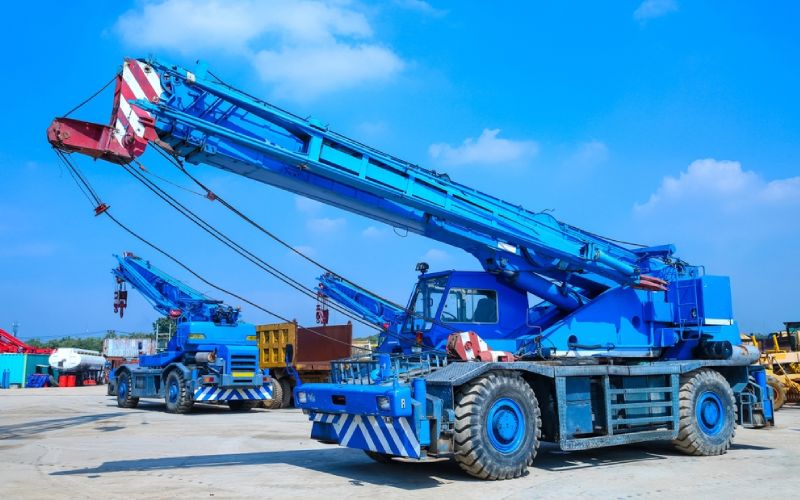
How to Choose the Right Rough-Terrain Crane for UAE Desert Solar Projects During Winter
Designing, building, and maintaining large-scale solar farms in the UAE desert is a logistical feat, one that leans heavily on the performance and suitability of the lifting machinery behind the scenes. Winter softens the heat, yes, but it adds its own complications: sand that shifts unpredictably, cold nights that stiffen metal and slow hydraulics, early-morning fog hanging low over the site, and constant expansion and contraction of materials as temperatures swing. Out here, choosing the right rough-terrain crane isn’t just a box to tick on a technical checklist; it becomes a strategic decision that shapes costs, timelines, and the safety of the people working on the ground.
Rough-terrain cranes have long carried the weight of remote construction work, but a desert solar farm especially in winter pushes them into a different league. The season demands cranes with steadier footing, tighter response in confined spaces, and a kind of mechanical resilience that doesn’t mind colder, compacted sand under the tires. It’s an environment where the room for error shrinks quickly, and the value of choosing the right machine grows just as fast.
Understanding Winter’s Impact On Desert Solar Site Logistics
Winter in the UAE desert might seem mild, but microclimate shifts can dramatically alter site conditions. Moisture retention in compacted sand increases surface hardness, making it more supportive during early hours but unpredictable as temperatures rise. Winds are also stronger in winter months, with gusts exceeding 40 km/h conditions that significantly impact crane stability and allowable lifting speeds.
Research from the Middle East Solar Industry Association (MESIA) suggests that seasonal climate variations can increase lifting operations time by 12–18% if equipment is not optimized for shifting terrain patterns. A correctly matched rough-terrain crane compensates for these fluctuations through wider outriggers, improved tyre traction, and boom systems designed for precision in variable wind loads.
Key Crane Specs That Matter For Winter Solar Projects
Selecting the right machine means understanding the interaction between crane specifications and environmental realities.
Lifting Capacity And Radius
Solar projects frequently involve repetitive handling of prefabricated modules, many of which weigh between 35–60 kilograms individually but are transported in stacked bundles of up to 1.5 tons. Torque and stability become essential, as lifting angles change when navigating through dense panel rows. A crane with a slightly higher capacity than project minimums typically 30–60 tons for mid-sized solar installations helps mitigate risk of overloading.
Boom Length And Mobility
Winter fog reduces visibility, and layouts with thousands of panels limit movement paths. Telescopic booms with a reach of 25–40 meters allow safe module deployment without repositioning the crane repeatedly, reducing fuel burn and movement-related risks.
Tyre And Undercarriage Engineering
RTCs need tires with wide contact patches to maintain traction on desert sand, especially in colder mornings when sand compacts and later loosens as temperatures rise. Four-wheel steering helps navigate narrow maintenance corridors that many solar farms are designed with.
Why Rough-Terrain Cranes Stand Out In UAE Winter Conditions
Rough-terrain cranes are specifically engineered for off-road conditions, making them indispensable for remote energy projects. Their low center of gravity, oversized tires, and adaptive steering systems provide stability on uneven or shifting surfaces. In winter desert environments, this translates into fewer operational delays and reduced safety risks—two metrics that directly impact project ROI.
Industry field data shows that RTCs decrease repositioning times by up to 40% compared to all-terrain cranes on sandy worksites. This efficiency gains compounds over weeks of module installation, making rough-terrain cranes the preferred choice among EPC (Engineering, Procurement, Construction) contractors.
It’s no surprise that many solar developers rely heavily on rough terrain crane rental services during winter phases, ensuring they can access the right machine without long-term capital commitments.
Operational Considerations Before Choosing Your Crane
Site Accessibility
Solar farm layouts often include long, narrow arrays with limited turning radius. Choose cranes with shorter carrier wheelbases and enhanced steering flexibility.
Weather Analysis
Wind load data should guide your selection. A crane rated for 12–15 m/s operational wind speeds is preferable for open-desert lifting.
Operator Visibility And Control Systems
Advanced load moment indicators (LMI), cameras, anti-sway systems, and real-time telematics improve precision and safety critical when winter fog reduces visibility.
Maintenance And Reliability
Cold desert nights can affect hydraulic oil viscosity. Ensure the crane supports winter-grade lubricants and has responsive cold-start systems.
Economic And Sustainability Considerations
The global shift toward renewable energy has put real pressure on the construction industry to reckon with the emissions behind its equipment. Rough-terrain cranes have started to evolve in response. Some newer RTC models now trim fuel usage by up to 18%, thanks to smarter throttle mapping and more efficient hydraulic pathways, and small mechanical changes you can actually feel in the way the engine behaves under load. Choosing a crane with these capabilities isn’t just about trimming the fuel bill; it supports the environmental goals that solar projects are built on.
Across the UAE, sustainability has moved from a marketing term to a measurable expectation. Contractors are being asked to look closely at the full arc of a machine’s impact—how much fuel it burns over its lifetime, how often it needs to be transported, and even the emissions tied to its manufacturing and eventual retirement. Opting to rent rather than buy spreads those embodied emissions across many projects and keeps machines in active use instead of sitting idle in a yard. It’s a quieter, more practical form of circularity.
Selecting the right rough-terrain crane for winter work in the UAE desert calls for a mix of technical judgment and an honest read of the site itself. The ideal machine holds steady when the sand firms up overnight, stays composed when crosswinds roll through panel rows, and threads cleanly through narrow installation corridors. It should do all of that without straining your budget or your project’s environmental targets.
As the UAE presses forward with its renewable-energy buildout, the cranes supporting these fields become part of the story. When the right one shows up on site, you can feel the difference immediately: the work moves cleaner, safer, and with a sense that the machine is helping, not fighting, the environment around it. The right crane doesn’t just lift components; it quietly lifts the whole project’s potential.
