


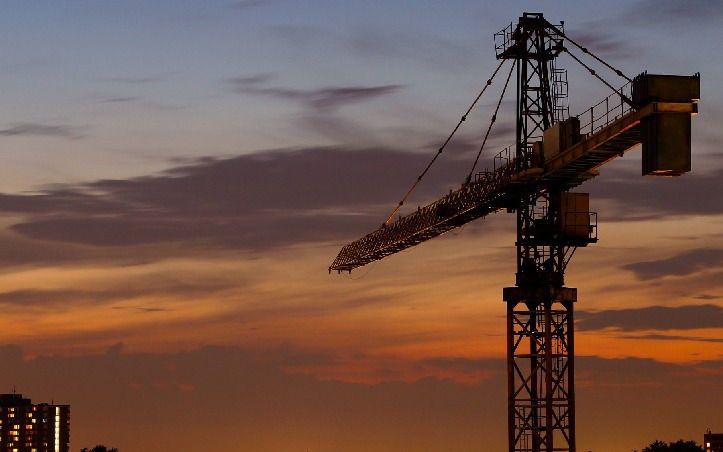
Night-Shift Lifting in Dubai: Equipment Selection Under Noise & Visibility Restrictions
Dubai’s construction ecosystem increasingly relies on night work to protect daytime traffic flow, maintain productivity during peak heat, and meet compressed handover dates. However, once lifting moves into night-shift windows, the operating environment changes in ways that materially affect equipment choice and lift planning. Noise limits tighten, visibility becomes engineered rather than ambient, and authority expectations shift toward disruption control. For projects dependent on crane services in Dubai, the correct equipment selection is therefore not a procurement detail; it is a compliance and risk decision that shapes programme predictability, safety outcomes, and overall cost control.
At Safest Lift, our experience across complex lifting scopes in Dubai shows that night operations must be assessed through a distinct planning and risk framework. Daytime suitability does not automatically translate into night performance, particularly where residential proximity, restricted movement windows, and lighting spill controls apply.
Regulatory Oversight And Night-Shift Operating Limits
Night lifting activities are typically reviewed with heightened sensitivity because they overlap with residential quiet hours, arterial road networks, and critical public infrastructure. Authorities may impose restrictions on permissible noise levels, lighting directionality, transport timing, and on-site control measures. Permit submissions often require detailed lift methodology, route validation, and documented risk controls demonstrating minimal external disruption, with supporting engineering documentation built into the lifting plan process.
Unlike daytime lifting, where environmental conditions are relatively stable, night work introduces engineered visibility, reduced peripheral awareness, and higher reliance on communication discipline. These constraints influence not only the crane configuration but also selection of ancillary equipment, lighting systems, load-handling tools, and control technologies that reduce uncertainty during execution.
Visibility Requirements And Equipment Setup
Visibility is a primary risk driver in night lifting, and it is not solved by adding light alone. Lighting must be controlled to avoid glare, shadow zones, and spill beyond site boundaries. In practical terms, equipment selection should favour cranes and lifting systems with integrated work lighting, well-defined operator sightlines, and control interfaces that remain readable under low illumination.
Modern night-ready configurations often include directional task lighting, illuminated load indicators, and real-time monitoring displays that reduce operator fatigue during extended shifts. Where the lift involves precise placement, camera-assisted systems and load-moment monitoring provide measurable gains in situational awareness by reducing reliance on subjective visual estimation.
Across night-shift operations, project incident reviews commonly show that many near-miss conditions are linked to visibility gaps during rigging checks, hook alignment, or final placement not to capacity shortfalls. For this reason, selection criteria should weight visibility performance alongside lifting capacity, radius, and mobilisation practicality.
Equipment Selection Under Noise Restrictions
Noise restrictions materially influence equipment viability during night work. Diesel-powered machinery that performs effectively in daytime lifting may exceed acceptable noise thresholds when deployed near mixed-use or residential zones after hours. When noise triggers complaints or authority intervention, the outcome is rarely incremental; it can lead to enforced pauses, modified methods, or removal of equipment from site.
Low-noise operating profiles are therefore a selection advantage. Electric or hybrid systems, where feasible, reduce acoustic output and improve permit stability. Where diesel remains necessary due to capacity or duty-cycle requirements, newer engines with acoustic enclosures, vibration isolation, and controlled idle management tend to perform more predictably within restricted windows.
From an operational planning standpoint, noise-driven disruption is costly because it creates uncertainty rather than a single delay. Night shift windows are often fixed and narrow. When equipment selection does not account for acoustic performance, rework is introduced in the form of revised timing, altered work methods, or substitution of plant at short notice.
Stability, Precision, And Reduced Margin For Correction
Night lifting reduces tolerance for trial-and-error. Smaller site teams, limited laydown space, and constrained timing increase reliance on stable lifting behaviour and precise motion control. Equipment selection should therefore prioritise predictable load response, smooth slew and hoist control, and stabilisation systems that maintain consistent performance across variable ground conditions.
Engineering-led selection also considers how the equipment behaves during fine positioning. Night operations typically rely less on hand signals and more on structured communication protocols. Equipment that allows controlled micro-movements and maintains stable load line behaviour reduces dependence on manual correction at the final placement stage.
Safest Lift planning experience frequently shows that night inefficiencies arise from controllability issues rather than insufficient tonnage. A crane that is technically capable on paper may still introduce operational friction if its movement behaviour forces repeated adjustments under low visibility and tight time controls.
Mobilisation Windows And Route Practicality
Night lifting often aligns with off-peak transport windows, which are typically approved under strict route and timing conditions. Equipment dimensions, axle loads, modularity, and assembly requirements therefore affect feasibility at a programme level. Compact systems with modular assembly can reduce convoy complexity and simplify route validation, particularly in dense urban zones.
Reduced traffic does not remove mobilisation risk; it changes it. A breakdown during a restricted movement window can trigger cascading delays because recovery and replacement options are limited at night. Equipment reliability and service readiness should therefore be evaluated as part of selection, not treated as an afterthought.
Importance Of Technical Oversight
Effective night lifting depends on more than plant availability. Equipment selection must align with lifting methodology, authority expectations, and site-specific constraints, supported by integrated planning and execution control. When equipment decisions are made within an engineering-led framework incorporating risk assessment, compliance verification, and sequencing discipline, night lifting becomes more predictable and less disruption-sensitive.
Industry programme comparisons commonly show that projects using specialised night-lift planning reduce stoppage frequency and improve shift productivity versus reactive approaches, primarily through fewer compliance interruptions, fewer equipment substitutions, and more stable execution sequencing.
Night-shift lifting in Dubai is not simply daytime lifting moved to a different hour. It is a distinct operating environment shaped by noise limits, engineered visibility, restricted movement windows, and elevated regulatory sensitivity. Equipment selection under these conditions must extend beyond capacity and reach to include visibility performance, acoustic predictability, controllability, and mobilisation reliability. When approached through disciplined planning and specialist oversight, heavy lifting Dubai can deliver safe execution, stronger compliance outcomes, and tighter cost control without introducing avoidable risk into the programme.
